The honest answer
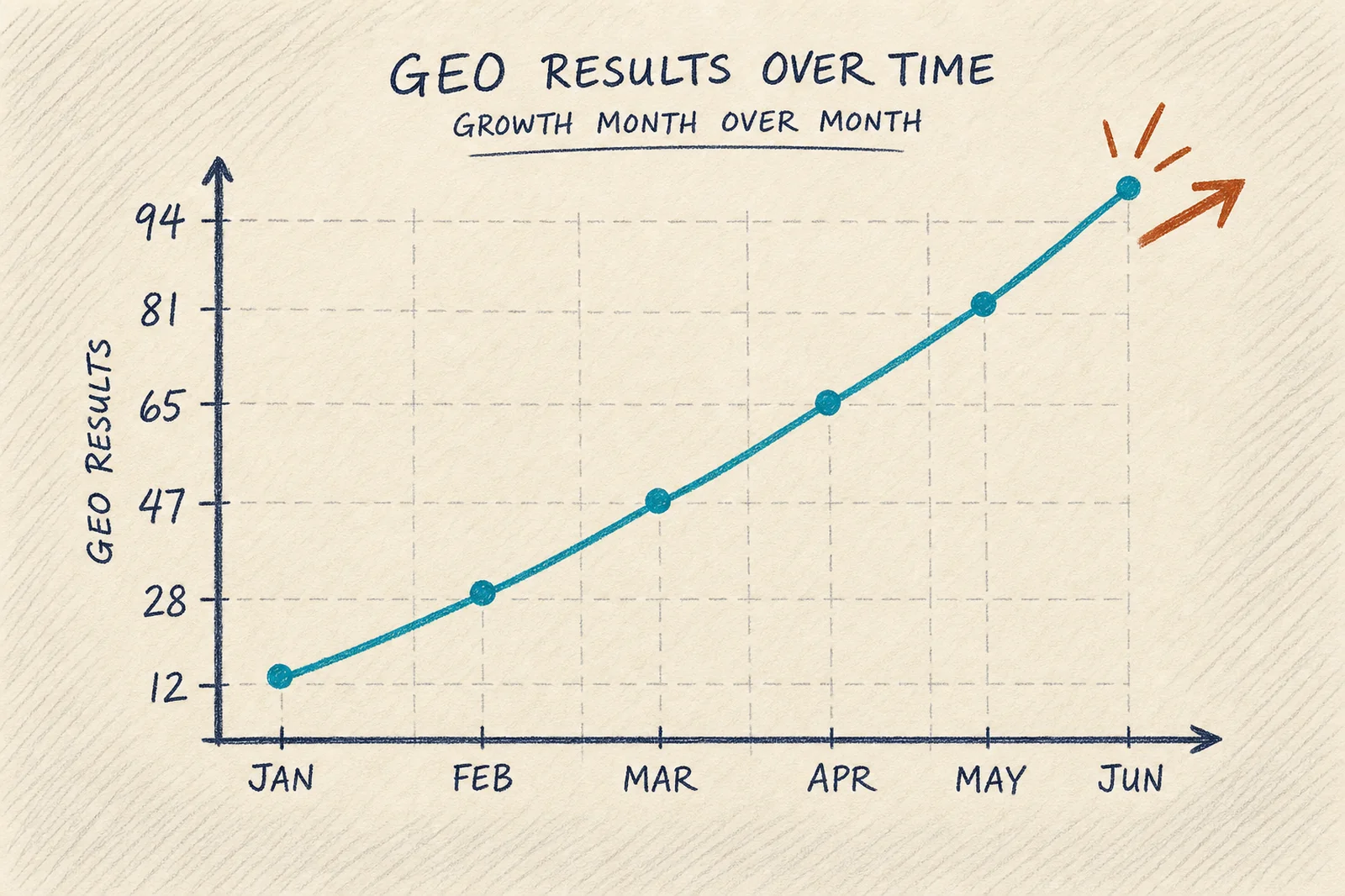
Yes. Generative Engine Optimization works when it's done properly, and unlike a lot of marketing, the results are measurable. It is not magic, and it isn't instant. But the mechanism is sound: AI engines recommend businesses they can read, verify, and quote, and GEO makes you all three.
The evidence
In a single 30-day engagement, a global luxury real estate brokerage went from invisible to AI-sourced revenue:
- Started at a 0 out of 15 AI-visibility score on its highest-value buyer queries.
- 64% of the site's bot traffic became AI crawlers including GPTBot, ClaudeBot, Bytespider, and Perplexity.
- 349 AI-referred sessions arrived in a single month. These were real users, not bots.
- The client reported two separate $30M leads attributed to ChatGPT, a $60M pipeline in total.
Why it works
Search is shifting from a list of links to a single recommended answer. The businesses an AI can parse, cross-reference, and trust today are the ones it names tomorrow. GEO supplies exactly those signals: structure, consistency, and corroboration, so you move from invisible to citable.
Who it works best for
GEO delivers the most where reputation and expertise drive the decision and a single deal is valuable: real estate, legal, medical, dental, financial advisory, and home services. In categories with low AI-answer penetration, the first movers tend to own the recommendation slot for a long time.
Where it doesn't work (the honest caveats)
GEO isn't a guaranteed ranking. No one controls AI output. It won't fix a fundamentally weak offer, and a thin or broken site limits how far it can go. It also rewards consistency: a one-time push fades, while ongoing signal-building compounds. Anyone promising a guaranteed number one spot in AI answers is overselling.
How to test it on your own business
You don't have to take it on faith. Ask ChatGPT, Perplexity, Gemini, and Claude the questions your buyers ask and see whether you're named. A free AI Visibility Audit does this systematically, scores you, and shows the specific gaps so you can decide with real data.